In Lebanon’s current environment, security is no longer a background function, it is a core part of business continuity. Yet many organizations, across sectors, continue to rely on outdated assumptions when it comes to protecting their people, assets, and operations.
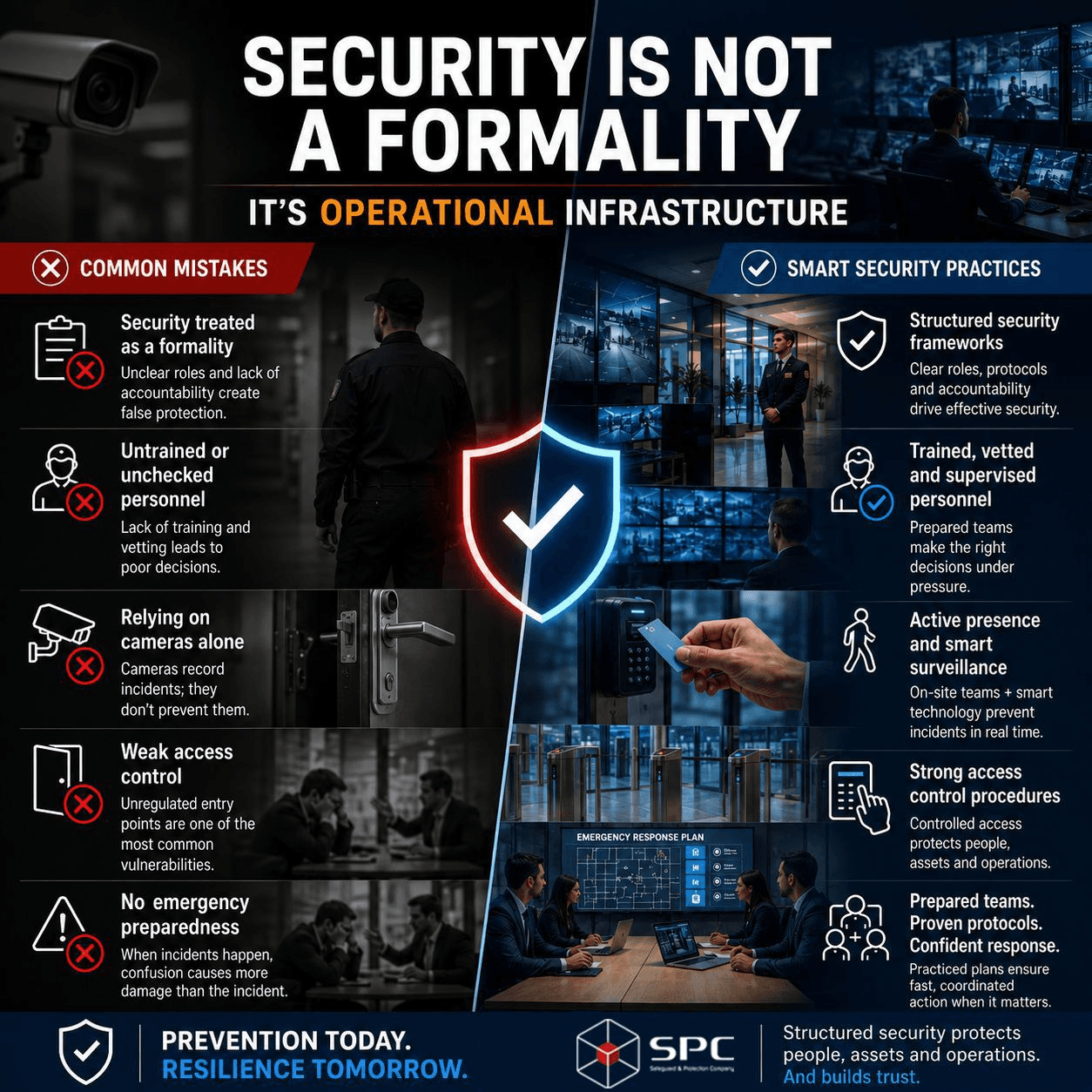
Here are five common security mistakes, and how to avoid them:
1. Treating security as a formality, not a function
Many businesses hire guards simply to “fill a position.” Without clear roles, protocols, or accountability, security becomes symbolic rather than operational.
What to do instead: Define responsibilities, reporting lines, and escalation procedures.
2. Relying on untrained or unchecked personnel
Untrained guards can create more risk than protection. In high-pressure situations, lack of preparation leads to poor decisions.
What to do instead: Ensure guards are properly trained, vetted, and continuously supervised.
3. Depending on cameras alone
CCTV systems are useful, but they are reactive tools. They record incidents; they don’t prevent them.
What to do instead: Combine surveillance with active, on-site security presence capable of immediate response.
4. Weak access control
Unregulated entry points, whether for visitors, deliveries, or even staff, are one of the most common vulnerabilities.
What to do instead: Implement structured access procedures and ensure guards are trained to enforce them consistently.
5. No emergency preparedness
When incidents happen, confusion often causes more damage than the incident itself.
What to do instead: Establish clear emergency protocols and ensure your security team is trained to act quickly and decisively.
Security is not about reacting to incidents, it’s about preventing them. Businesses that invest in structured, professional security frameworks are not only safer, they are more resilient and more trusted.
At SPC | The Safeguard & Protection Company, we see these challenges daily across different sectors, which is why structured security is never left to improvisation.
Boulos Balaa
https://www.linkedin.com/posts/boulos-balaa_securitystrategy-riskmanagement-businesscontinuity-activity-7460382687891972098-af0_
Here are five common security mistakes, and how to avoid them:
1. Treating security as a formality, not a function
Many businesses hire guards simply to “fill a position.” Without clear roles, protocols, or accountability, security becomes symbolic rather than operational.
What to do instead: Define responsibilities, reporting lines, and escalation procedures.
2. Relying on untrained or unchecked personnel
Untrained guards can create more risk than protection. In high-pressure situations, lack of preparation leads to poor decisions.
What to do instead: Ensure guards are properly trained, vetted, and continuously supervised.
3. Depending on cameras alone
CCTV systems are useful, but they are reactive tools. They record incidents; they don’t prevent them.
What to do instead: Combine surveillance with active, on-site security presence capable of immediate response.
4. Weak access control
Unregulated entry points, whether for visitors, deliveries, or even staff, are one of the most common vulnerabilities.
What to do instead: Implement structured access procedures and ensure guards are trained to enforce them consistently.
5. No emergency preparedness
When incidents happen, confusion often causes more damage than the incident itself.
What to do instead: Establish clear emergency protocols and ensure your security team is trained to act quickly and decisively.
Security is not about reacting to incidents, it’s about preventing them. Businesses that invest in structured, professional security frameworks are not only safer, they are more resilient and more trusted.
At SPC | The Safeguard & Protection Company, we see these challenges daily across different sectors, which is why structured security is never left to improvisation.
Boulos Balaa
https://www.linkedin.com/posts/boulos-balaa_securitystrategy-riskmanagement-businesscontinuity-activity-7460382687891972098-af0_